TL;DR
- Labeling video ads as AI-generated does not negatively affect brand choice, ad memory, or perceived production quality.
- Audiences demand AI labels most when content generates lifelike elements, particularly humans, animals, and voices.
- JoJo Ventures helps brands slash production costs by 50-70% while maintaining world-class storytelling and regulatory compliance.
The Rise of AI in Video Marketing and the Dilemma
The marketing landscape is undergoing a massive paradigm shift. As generative AI becomes increasingly sophisticated, marketers and advertisers are harnessing its power to create visually stunning and highly engaging video content. AI tools have democratized video production, allowing brands to iterate rapidly, personalize content at scale, and reduce traditional production bottlenecks. However, as the line between reality and AI-generated content blurs, a critical question has emerged: How much transparency do consumers expect, and will disclosing the use of AI hurt ad performance?
For a long time, the advertising industry has operated under the assumption that pulling back the curtain on AI-generated content might break the illusion for consumers. Advertisers feared that a “Made with AI” label would automatically downgrade the perceived quality of the video, leading to lower brand trust, decreased ad memory, and ultimately, poorer conversion rates. But as a groundbreaking new study reveals, these fears are largely unfounded.
The Impending Regulatory Wave: New York and the EU

Understanding consumer reaction to AI labeling is no longer just an academic exercise—it is an imminent legal necessity. The regulatory pressure surrounding AI in video advertising is rapidly intensifying across the globe. Governments and digital platforms are moving swiftly to ensure that consumers are not misled by deepfakes or hyper-realistic AI generations.
In the United States, New York’s AI Transparency in Advertising law is set to take effect in June 2026. This legislation mandates clear disclosures for political and commercial advertising that utilizes generative AI. Across the Atlantic, the European Union’s comprehensive AI Act is introducing binding disclosure obligations starting in August 2026. These legislative milestones have sent ripples through the advertising world, forcing brands and agencies to scramble for compliance strategies. The pressing concern has been whether these mandatory labels would act as a deterrent to consumers, diminishing the hard-earned ROI of video marketing campaigns.
The Groundbreaking MediaScience Study
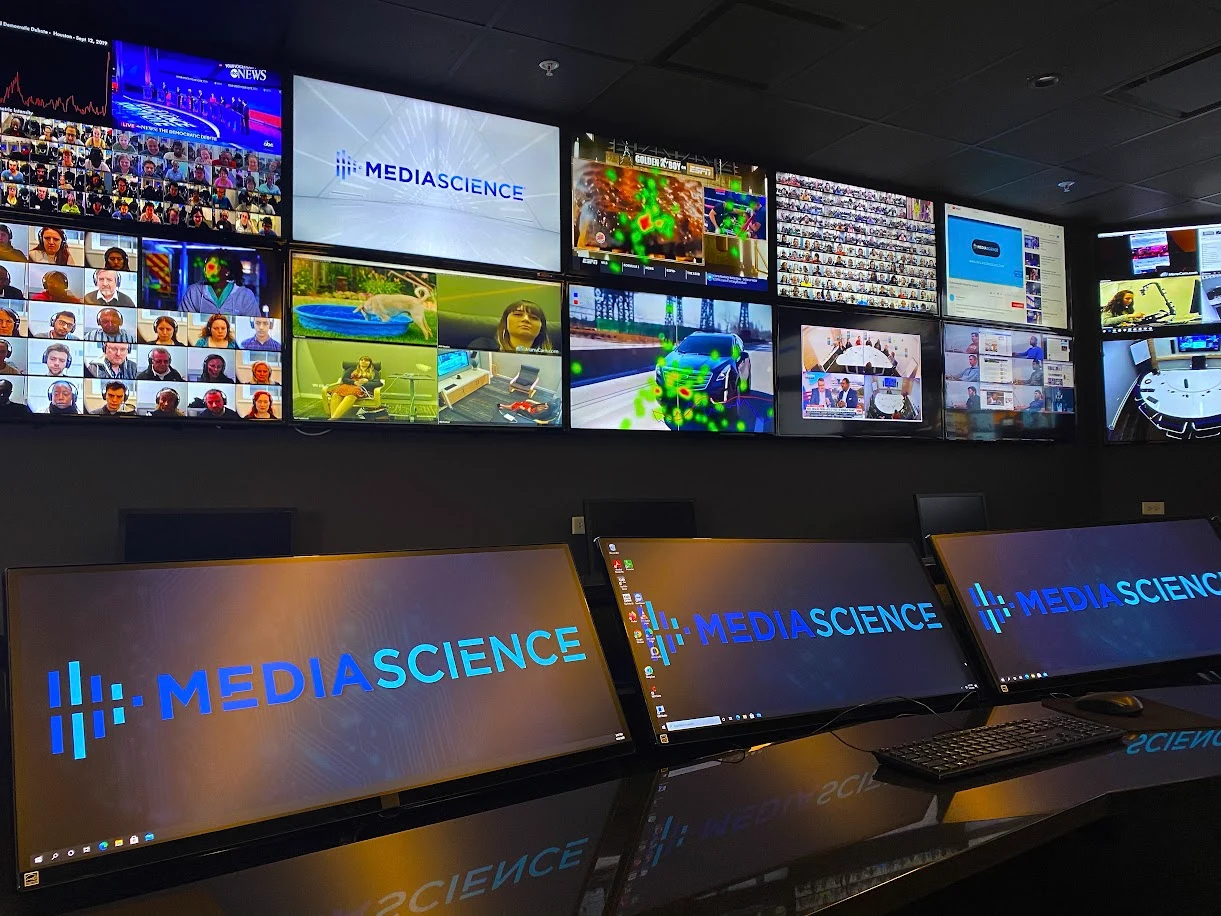
To address the mounting anxiety within the industry, MediaScience—a leading media research firm —conducted an extensive study in collaboration with the Ehrenberg-Bass Institute at Adelaide University and MediaPET.ai, an AI video content platform. The study sought to definitively answer whether AI labeling negatively impacts video ad performance.
The methodology was robust and highly relevant to the current legislative climate. The researchers surveyed 900 respondents across the United States, testing various labeling frameworks that are currently under active consideration by both U.S. and EU lawmakers. By comparing these labeled ads against a control group of unlabeled ads, MediaScience was able to isolate the exact impact of transparency on consumer behavior and brand perception.
The study tested four distinct approaches to AI disclosure, ensuring a comprehensive understanding of how different formats affect viewer perception:
- The 3-Second Text Label: A text disclaimer displayed prominently during the first three seconds of the video ad.
- The Delayed Text Label: A text disclaimer that appears later in the ad, specifically from seconds four through six.
- The Full-Duration Text Label: A continuous text disclaimer that remains visible on the screen for the entire duration of the ad.
- The Full-Duration Icon: A visual symbol (rather than text) displayed continuously throughout the ad to indicate AI generation.
Each of these four conditions was meticulously evaluated against a control scenario featuring no AI labeling whatsoever.
Surprising Results
The data from the MediaScience study provided a definitive and reassuring answer for advertisers: displaying an AI label does not cause any adverse change in ad performance. Across all four labeling conditions tested, there was absolutely no significant decline in key performance indicators.
Whether consumers saw a text label, an icon, or no label at all, their brand choice, ad memory, brand recognition, and brand attitude remained remarkably stable. Furthermore, the perceived production quality of the video and the overall ad liking showed no significant difference from the control group.
Dr. Duane Varan, CEO of MediaScience, summarized the findings perfectly: “There has been a lot of anxiety in the industry about what happens when you tell people an ad was made with AI. The data gives us a clear answer: if the creative is good, disclosure does not hurt it. Advertisers do not need to be afraid of the label.”
This is a monumental revelation for the SEO and digital marketing communities. It proves that transparency and performance are not mutually exclusive. When advertisers focus on delivering a compelling narrative and high-quality visuals, the presence of an AI disclosure becomes a non-issue for the viewer.
The Awareness vs. Preference Paradox
While performance remained stable across the board, the study did uncover interesting nuances regarding how different labels affect consumer awareness and memory.
The primary goal of AI labeling is to increase viewer awareness that the content is synthetically generated. In this regard, text labels were highly effective. Displaying a text disclaimer during the first three seconds of the ad boosted viewers’ awareness of AI generation by 28%. When the text label was run continuously for the full duration of the ad, awareness increased by 36%.
Interestingly, there was a disconnect between consumer preference and actual effectiveness. When asked, 42% of the respondents stated they preferred the visual icon over text labels. However, the data showed that the icon was actually the least effective method for increasing AI awareness.
Furthermore, text labels outperformed the control group in terms of ad memory. While the control group scored a 36 on ad memory, the 3-second label scored a 46, the delayed label scored a 40, and the full-duration text label scored the highest at 49. The icon scored a 38, hovering near the control baseline. This suggests that explicit text disclosures not only fulfill regulatory requirements but might actually serve as a pattern interrupt that enhances a viewer’s memory of the ad.
Where Transparency Matters Most to Consumers
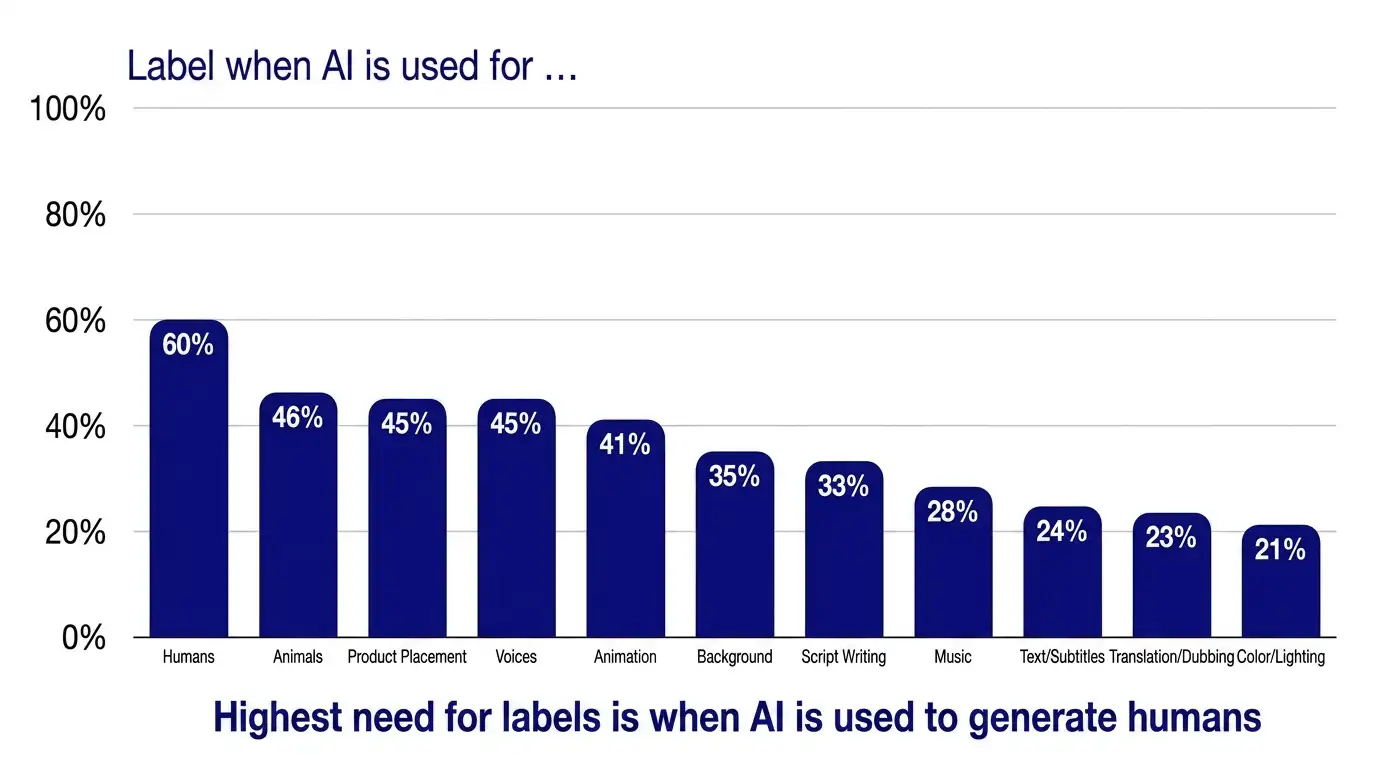
Another critical insight from the study is understanding exactly when consumers feel AI labeling is necessary. The demand for transparency is not uniform across all types of AI-generated content; it spikes dramatically when AI is used to emulate reality closely.
According to the respondents, the strongest need for AI disclosure occurs when the technology is used to generate humans, with 60% of audiences demanding a label. This is likely tied to the “uncanny valley” effect and the desire to know whether the person endorsing a product or conveying emotion is real or synthetic. Following closely behind were the generation of animals (46%), product placements (45%), and synthesized voices (45%).
For advertisers, this provides a clear roadmap. If your video ads feature AI-generated digital humans, lifelike animals, or voiceovers, proactive transparency is not just legally advisable—it is what your audience expects.
Embracing the AI Revolution Without Fear
The key takeaway from the MediaScience study is profoundly liberating for creative agencies and brands. The industry no longer needs to hide its use of cutting-edge technology. AI is a powerful tool that enables unprecedented creativity, efficiency, and scale in video marketing. By embracing transparency, brands can comply with upcoming regulations like the New York AI Transparency law and the EU AI Act without sacrificing the effectiveness of their campaigns.
The golden rule remains unchanged: creative excellence is paramount. If the storytelling is gripping, the visuals are striking, and the message resonates with the target audience, an AI label will not derail the campaign. Instead of worrying about the stigma of AI, brands should focus their energy on partnering with the right creators to produce exceptional content.
Master AI Video Production with JoJo Ventures

As the advertising industry adapts to these new transparency standards, leaning into AI-generated content is no longer a risk—it is a competitive necessity. For brands looking to scale their video marketing without compromising on quality or compliance, JoJo Ventures is your ideal partner.
As Hong Kong’s leading AI-native creative studio, JoJo Ventures specializes in AI-powered performance ads, hyper-realistic digital humans, and generative video production. By eliminating the need for expensive traditional shoots, actors, and physical locations, JoJo Ventures streamlines the entire workflow. They deliver world-class, high-impact storytelling in weeks rather than months, effectively cutting production costs by 50% to 70%.
Whether you are a startup needing a distinctive brand voice or an enterprise seeking measurable business results, JoJo Ventures combines audience insights with rapid iteration to optimize every stage of your marketing funnel. Ready to stand out from the noise and build the future of content? Contact JoJo Ventures today and discover how their dedicated AI creators can unlock ROI-driven production for your brand.