Skip to content Skip to sidebar Skip to footer

Demystifying China’s AI Short Dramas: The Secrets Behind the 90% Cost Drop

In recent years, China’s entertainment industry has seen the rapid rise of AI short dramas and AI comic dramas. By integrating generative AI across the entire production pipeline—from scripting to post-production—these bite-sized formats are reshaping content consumption. Compared with traditional productions, AI-driven dramas significantly reduce costs and production time, enabling a surge in scalable content creation.

China’s micro-drama market has expanded rapidly. By June 2025, it reached 696 million users (nearly 70% of internet users), growing to 718 million MAU by February 2026. Platforms like Hongguo Short Drama exceeded 300 million MAU. In 2025, total industry revenue surpassed RMB 100 billion, nearly double China’s box office revenue. AI comic dramas alone generated RMB 16.8–20 billion, accounting for about one-third of the market and becoming a key growth driver.

Read More

A Hong Kong Enterprise Guide to AI Avatars

As generative artificial intelligence enters a phase of hyper-acceleration, Hong Kong enterprises looking to drive business transformation are focusing on how to harness technological innovation for industrial upgrading. In this landscape, AI Avatars (or Digital Humans) have rapidly evolved from futuristic visual concepts into highly practical business tools capable of driving cost efficiency and elevating customer experience.

Faced with steep operational costs, structural frontline labor shortages, and the unique demand for high-quality bilingual (written Chinese and English) and trilingual (spoken Cantonese, English, and Mandarin) services, adopting AI Avatars is no longer just about building a modern brand image. Instead, it has become a strategic decision that can determine the success of an enterprise's digital transformation roadmap.

This guide systematically explores four core application scenarios for AI Avatars, details their technical implementation paths, and examines the compliance measures required under the latest guidelines from Hong Kong's Office of the Privacy Commissioner for Personal Data (PCPD).

Read More

【AI for Empowering Learning and Teaching Funding Programme】How Can Schools Achieve The AI Teaching KPIs?

The Education Bureau (EDB) has officially released the Blueprint for Digital Education Development in Primary and Secondary Schools (the “Blueprint”), setting out a clear roadmap for the digital transformation of education across Hong Kong. At the same time, the Quality Education Fund (QEF) has launched the "Empowering Learning and Teaching through AI" Grant Scheme, allocating…

Read More

Resurrecting the Dead with AI Avatars—Healing Balm or Ethical Trap?

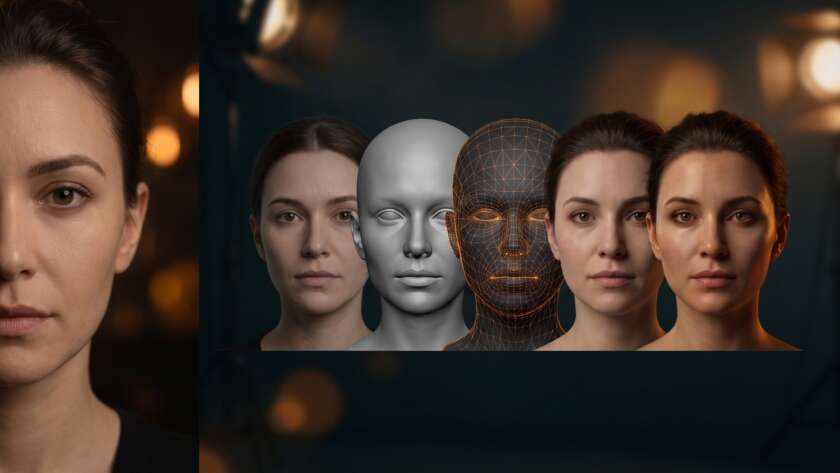
Stepping into 2026, AI virtual humans and digital avatars have matured to a staggering degree. Armed with just a few photos, a three-minute voice clip, and a history of chat logs, generative AI can clone a deceased loved one in seconds—matching their appearance, replicating their cadence, and even mimicking their unique behavioral quirks.

This technological leap has birthed one of the most emotionally charged and fiercely debated innovations of our time: AI Resurrection.

No longer confined to the dystopian episodes of Black Mirror or sci-fi blockbusters, "Grief Tech" is a thriving reality. But as technology grants us the godlike ability to blur the boundary between life and death, we are forced to confront a heavy question: Are we creating the ultimate cure for grief, or are we wandering blindly into a psychological, ethical, and legal minefield?

This deep-dive article explores real-world case studies across Greater China, unpacks the psychological and ethical dilemmas of digital immortality, and reviews the global legal landscape as it stands in 2026.

Read More