Skip to content Skip to sidebar Skip to footer

Case Study: When Traditional Theater Meets AI Innovation

At JoJo Ventures, we thrive at the intersection of cultural heritage and high-tech storytelling. Recently, we had the distinct honor of collaborating with the Hong Kong Repertory Theatre (HKRep) on a massive visual undertaking: producing 16 promotional films for their upcoming season.

The project covered eight distinct plays, each requiring a cinematic 16:9 widescreen version and a social-first 9:16 vertical version. Today, we’re pulling back the curtain on one of the most visually arresting pieces from this collection: The Diary of Song.

Read More

Can You Still Trust Your Eyes? A Practical Guide to Spotting AI-Generated Content in 2026

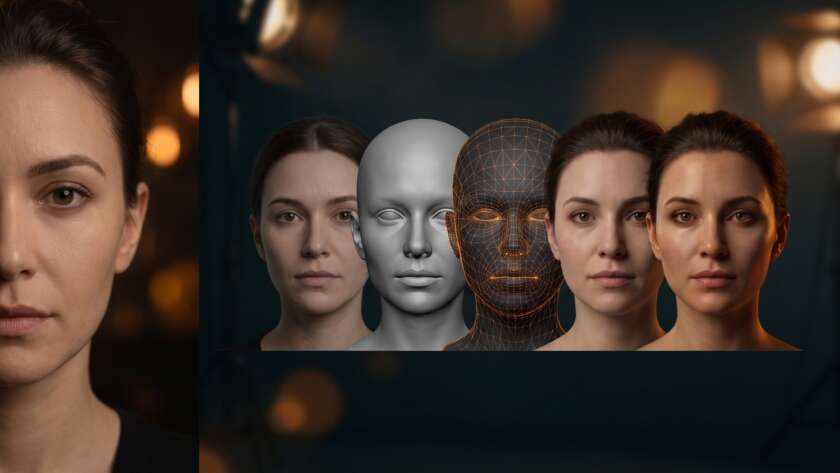
In today’s global information landscape, the world has evolved into a simulated space deeply shaped by artificial intelligence (AI). With the convergence of diffusion models and large language models (LLMs), the realism of generative content has surpassed the threshold of human perceptual recognition. This article aims to serve as a comprehensive guide for the general public, technology enthusiasts, and educators, analyzing how AI-generated videos, images, and information are created and proposing an integrated framework for detection based on physical characteristics, linguistic statistics, and cryptographic provenance protocols.

Read More

Case Study: JoJo Ventures Brings Pixar-Style Magic to Pfizer’s Latest Campaign

In the fast-paced world of digital marketing, pharmaceutical brands face a unique challenge: how to deliver rigorous medical information while maintaining a warm, human connection with the audience.Following the success of our previous two collaborations, JoJo Ventures was recently invited back by Pfizer to produce a new social media campaign for their antidepressant, Pristiq. Our mission was to translate the clinical benefits of the medication—specifically its high treatment adherence and low side-effect profile—into an approachable, animated narrative that resonates with the Hong Kong public.

Read More

Nano Banana 2 vs Nano Banana Pro

Nano Banana 2 vs Pro: What Are The Differences?

The rapid progression of generative artificial intelligence has moved beyond the era of stochastic experimentation into a phase of rigorous industrial application. Within this context, the release of Google’s Nano Banana 2 on February 26, 2026, represents a significant milestone in the convergence of high-fidelity reasoning and high-throughput inference. This model, technically identified as Gemini 3.1 Flash Image, serves as the evolutionary successor to the original Nano Banana (Gemini 2.5 Flash Image) and the specialized Nano Banana Pro (Gemini 3 Pro Image). By analyzing the architectural discrepancies, performance benchmarks, and economic implications of these models, it becomes evident that Google is attempting to resolve the fundamental tension between generation latency and semantic precision.

Read More