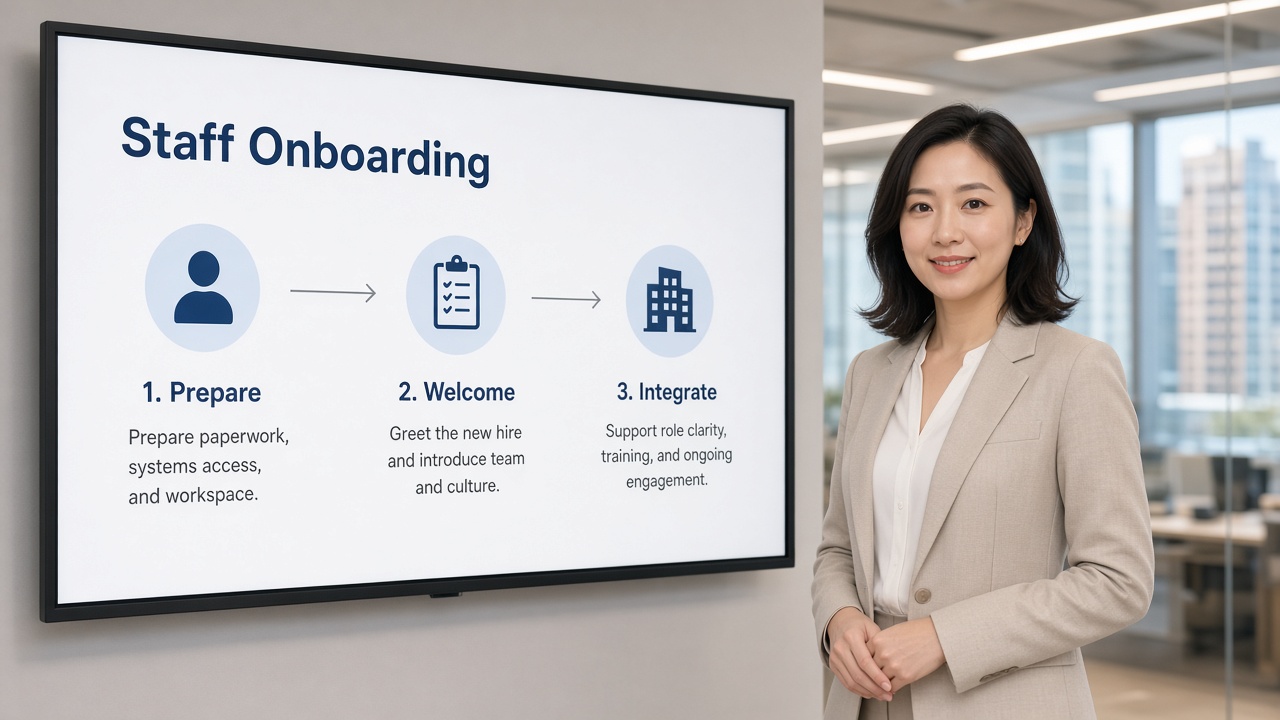
Most corporate training libraries age badly. A compliance module still shows last year’s logo. An onboarding video demos a UI that no longer exists. An executive message quotes a policy Legal rewrote two quarters ago. Re-shooting every update is expensive, so teams leave the outdated clip live — or fall back to PDFs nobody watches.
AI training videos change that equation. A locked digital human, an approved script and a controlled workflow can turn policy and product updates into watchable modules in days — including Cantonese, English and Mandarin from one master. Done carefully, HR and L&D refresh content without a studio every handbook change. Done carelessly, sensitive SOPs leak into public tools and an unreviewed synthetic voice reaches thousands of employees. This playbook is about the first outcome, not the second.
TL;DR
- AI training videos are a refresh engine: treat them as a way to keep onboarding, compliance and product modules current, not as a replacement for every facilitator-led session.
- Start from approved scripts and real SMEs: the presenter can be synthetic; the facts, claims and policy language cannot. Human review stays in the loop.
- Localize once, govern always: produce Cantonese, English and Mandarin from one master, and keep sensitive materials off public generative tools — Hong Kong’s PCPD has clear guidance for employee use of GenAI.
Example: JoJo’s Talenox leave guide
JoJo uses short AI training videos as fast, easy-to-follow guides for staff. One example is a ~30-second English explainer for the Talenox leave rollout: how to apply for leave in the web or mobile app, submit dates and leave type (with medical certificate for sick leave), get team-lead or admin approval, and see how approved leave updates the annual leave balance and payslip. Team leads also get a leave calendar view so they can plan around who’s away. Built for JoJo employees and team leads as an internal process guide — the same script-to-video pattern HR and L&D teams can use for other simple workflows.
What Are AI Training Videos?
AI training videos are learning modules where some or all of the on-camera production is generated: a digital human or AI avatar delivers the script, synthetic voice matches lip sync, and slides, screen captures or generated b-roll fill the supporting visuals. The instructional design stays human — learning objectives, assessment points and SME accuracy — while the camera, talent booking and re-take cycle shrink.
For enterprises, the useful comparison is which assets benefit from a reusable presenter who can re-record a corrected paragraph without recalling a crew: onboarding and policy explainers, product and systems training tied to release notes, compliance refreshers, and internal broadcasts that need the same message in several languages on the same day.
JoJo’s service list already groups these under Training & Educational — because buyers ask for them as a category, not as a one-off experiment.
When AI Training Videos Make Sense (and When They Don’t)
A good fit
- High-churn content that must stay accurate: policies, product flows, safety checklists.
- Multi-language cohorts across Hong Kong, mainland China and regional offices.
- Catalog scale — dozens of short modules rather than one prestige keynote.
Better with real people
- Leadership and culture moments where the CEO’s presence is the point.
- Sensitive coaching, soft skills and high-stakes role-play that need live facilitation.
- Anything quoting a named employee’s personal experience without informed consent for likeness and voice.
Our Hong Kong enterprise guide to AI avatars maps training alongside other scenarios. This post zooms into the L&D production path.
A 6-Step Script-to-Video Playbook
1. Inventory what is outdated — and what must never leak
List modules by freshness, risk and language need. Flag personal data, unpublished pricing, incident details or unreleased roadmaps for a private production path — not a free public AI tool. Decide which source of truth wins when the LMS, intranet and handbook disagree.
2. Write for the ear, then get SME sign-off
Write for the ear: short sentences, one idea per beat, on-screen cues for numbers and steps. Get SME approval before generating video. Changing a paragraph after lip sync is cheap; changing a wrong compliance claim after launch is not.
3. Lock the presenter and the consent paperwork
Choose a stock digital human or build a custom brand presenter for series consistency. If the face or voice is based on a real person, get written consent covering scope, channels, duration and withdrawal. Store a character sheet so every module feels like the same channel.
4. Produce in batches and localize from one master
Approve one master script, then generate Cantonese, English and Mandarin versions, with Traditional Chinese on-screen text for Hong Kong and Taiwan. Keep terminology consistent. Have a native speaker review every Cantonese cut — stiff phrasing makes training feel fake as quickly as it does in ads.
5. Package for the LMS, not just for YouTube
Deliver the formats your LMS or intranet accepts. Add captions, chapter markers and a short knowledge check where completion tracking matters. If you need SCORM or similar packages, confirm that at kickoff.
6. Schedule the refresh cycle
Put a calendar on every module: review after each policy change, product release or quarterly compliance window. Re-generate changed sections when possible. Retire clips that no longer match the handbook, even if they still look polished.
Governance: Consent, Data and Hong Kong Expectations
Internal video is still content that can create privacy and trust risk. Before you scale an AI training pipeline in Hong Kong, align with a few practical controls:
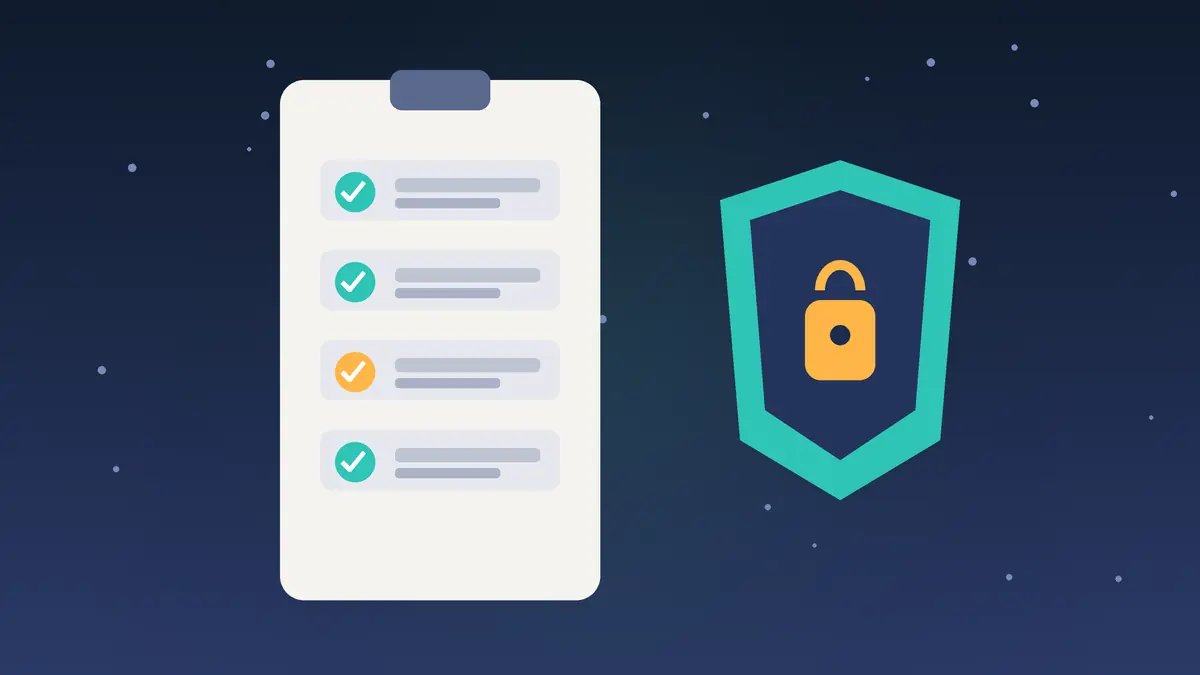
- Permitted tools and inputs: the PCPD’s Checklist on Guidelines for the Use of Generative AI by Employees (March 2025) asks organisations to define which GenAI tools staff may use, what they may input, how outputs are verified and labelled, and how incidents are reported. Training production should sit inside that policy, not beside it. The full checklist PDF is on the PCPD site under its resources publications.
- No sensitive uploads to public tools: keep employee personal data, confidential SOPs and unreleased product material out of consumer GenAI accounts. Prefer enterprise-grade tooling and vendors who will not train on your materials without explicit consent — see how JoJo uses, and doesn’t use, generative AI.
- Human verification: instructional designers or compliance owners should proof and fact-check every module before LMS publication. AI accelerates the draft; it does not own the accuracy.
- Label when it helps trust: for some audiences, a simple “AI presenter” or “digitally produced” note reduces confusion. Decide the labelling rule with Legal and Internal Comms once, then apply it consistently.
What Does an AI Training Module Cost?
Cost follows scope: DIY versus managed production, stock avatar versus custom digital human, module length, languages, graphics, LMS packaging and usage rights.
As a reference point, JoJo’s published pricing starts from HKD 12,000 for 30 video seconds, and from HKD 20,000 for 60 video seconds that can be split across multiple videos. AI voiceover, multi-language dubbing and an AI digital spokesperson are available as add-ons. Compare quotes like for like: seconds, languages, revisions, LMS deliverables and tool-stack controls for sensitive content.
FAQ
Are AI training videos good enough for compliance topics?
They can be, if the script is SME-approved, the claims match the current policy text and a human reviewer signs off before publication. The risk is not the digital human — it is shipping outdated or unverified wording at scale.
Can we use our CEO’s face as the training presenter?
Only with explicit written consent covering likeness, voice, channels and duration, plus a plan for what happens if they leave the company. Many teams prefer a dedicated brand presenter for evergreen modules and reserve real executives for living messages.
How do Cantonese AI training videos compare with English ones?
Quality varies by voice model and lip-sync pipeline. Always budget a native review pass for tone, colloquial phrasing, product-name pronunciation and Traditional Chinese captions. A technically correct but unnatural Cantonese track will hurt completion rates.
Will employees reject an AI presenter?
Acceptance depends on honesty and usefulness. Learners tolerate a clearly synthetic presenter when the content is clear, current and respectful of their time. They push back when the video feels deceptive, robotic or full of errors a human would have caught.
DIY avatar tools versus an agency — which should L&D choose?
DIY suits low-risk explainers and teams that already own instructional design. An agency path fits multi-language series, custom brand presenters, sensitive materials and packaging into enterprise LMS workflows. Our draft buyer checklist for choosing an AI video partner covers the comparison criteria in more depth once it is published.
Our Thoughts
AI training video will not replace great facilitators. It replaces the false choice between “expensive re-shoot” and “outdated PDF.” Treat digital humans as a production system: approved scripts, locked presenters, trilingual delivery, scheduled refreshes and governance Legal can defend. Speed is the benefit. Accuracy and trust make that benefit durable.
About Us
JoJo Ventures is an AI-native creative studio in Hong Kong. We help brands and enterprises turn generative AI into enterprise-grade content: AI video production, digital humans and AI avatars for campaigns and training, performance ad creative and AI consultancy, with brand governance and human review built into every project. AI-led production can cut costs by up to 70% compared with traditional shoots, and our Pfizer campaign case study shows our process in action. You can also read how JoJo Ventures uses, and doesn’t use, generative AI.
Ready to pilot AI training videos? Send us one approved training script and we will scope a pilot module in Cantonese, English and Mandarin. For quick supporting stills and on-screen graphics, try JifChat.
- Email: business@jojo.ventures
- WhatsApp: +852 9853 7469
- Address: Unit D, 16/F, Boton Technology Innovation Tower, 368 Kwun Tong Rd, Kwun Tong, Hong Kong
Ready to scale your content?
Join Enterprise Brands, leverage our AI creative studio to produce stunning, platform-ready videos at a fraction of the cost.