The release of **GPT-5.4** marks a definitive shift in the AI landscape. We are moving away from the era of "chatting" with an AI and entering the era of the **AI Agent**. For the modern professional, GPT-5.4 isn't just a smarter chatbot; it’s a digital collaborator that has finally "grown hands" to execute complex tasks across your favorite applications.
In this deep dive, we explore how GPT-5.4’s new thinking architecture and native computer-use capabilities are set to redefine productivity.
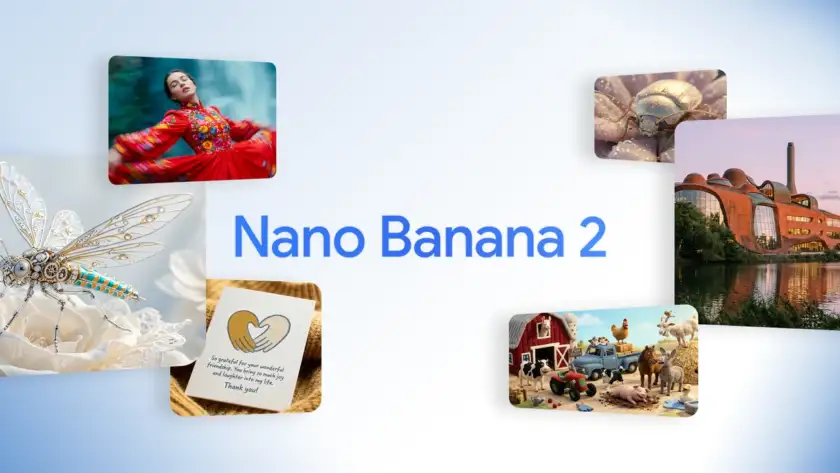
The rapid progression of generative artificial intelligence has moved beyond the era of stochastic experimentation into a phase of rigorous industrial application. Within this context, the release of Google’s Nano Banana 2 on February 26, 2026, represents a significant milestone in the convergence of high-fidelity reasoning and high-throughput inference. This model, technically identified as Gemini 3.1 Flash Image, serves as the evolutionary successor to the original Nano Banana (Gemini 2.5 Flash Image) and the specialized Nano Banana Pro (Gemini 3 Pro Image). By analyzing the architectural discrepancies, performance benchmarks, and economic implications of these models, it becomes evident that Google is attempting to resolve the fundamental tension between generation latency and semantic precision.
On February 9, 2026, the AI video landscape underwent a fundamental shift. ByteDance officially released Seedance 2.0, a model that moves beyond the "lottery-style" generation of the past and into what researchers call the "Director Era." By integrating a Dual-Branch architecture with a revolutionary multi-modal reference system, Seedance 2.0 offers a level of precision that makes "one-person film crews" a reality.
"I want AI to help me get stuff done, but with hundreds of tools out there, how do I know which one is actually right for me?"
If that sounds like you, you’re not alone. In 2026, the biggest hurdle for AI beginners in Hong Kong isn't "learning the tech", it’s knowing which tool to use…