Stepping into 2026, AI virtual humans and digital avatars have matured to a staggering degree. Armed with just a few photos, a three-minute voice clip, and a history of chat logs, generative AI can clone a deceased loved one in seconds—matching their appearance, replicating their cadence, and even mimicking their unique behavioral quirks.
This technological leap has birthed one of the most emotionally charged and fiercely debated innovations of our time: AI Resurrection.
No longer confined to the dystopian episodes of Black Mirror or sci-fi blockbusters, “Grief Tech” is a thriving reality. But as technology grants us the godlike ability to blur the boundary between life and death, we are forced to confront a heavy question: Are we creating the ultimate cure for grief, or are we wandering blindly into a psychological, ethical, and legal minefield?
This deep-dive article explores real-world case studies across Greater China, unpacks the psychological and ethical dilemmas of digital immortality, and reviews the global legal landscape as it stands in 2026.
I. Real-World Cases in Greater China: When “Digital Life” Meets Reality
The phenomenon of AI resurrection has triggered a profound cultural earthquake in East Asian societies. From deeply moving stories of parental devotion to viral controversies that sparked widespread public outrage, the technology is already manifesting in wildly different ways.
1. Taiwan: Tino Bao “Brings Back” His 22-Year-Old Daughter

Source:https://tw.news.yahoo.com/包小柏-ai愛女-現身畢典-22歲罹-這罕病-092800005.html
This stands as one of the most poignant and widely respected use cases of Grief Tech in the Mandarin-speaking world. Tino Bao, a well-known Taiwanese musician, lost his beloved daughter to a rare disease in 2021. Plunged into debilitating grief, he vowed to use digital technology to “bring her back.”
Tino went so far as to pursue a doctorate to personally dive into AI research. Because his daughter’s illness had prevented her from speaking normally towards the end of her life, the remaining audio files were tragically scarce—consisting of just three simple sentences spoken in English. Yet, using this microscopic dataset, Tino spent over two years rebuilding her digital voice model and dynamic avatar.
In early 2024, he shared a video that moved millions: a digitally resurrected version of his daughter sang a birthday song to her mother and spoke to her family. Tino stated:
“For me, AI is a tool to reconstruct my daughter’s presence. It filled the permanent, bleeding void in our hearts, allowing us to reunite in the digital realm.”
2. Mainland China: SenseTime’s Dignified Goodbye vs. Non-Consensual “Celebrity Ghosts”
In Mainland China, the commercialization of AI resurrection has moved at a breakneck pace, yielding two starkly contrasting societal reactions.
- A Legacy of Dignity — Tang Xiao’ou:
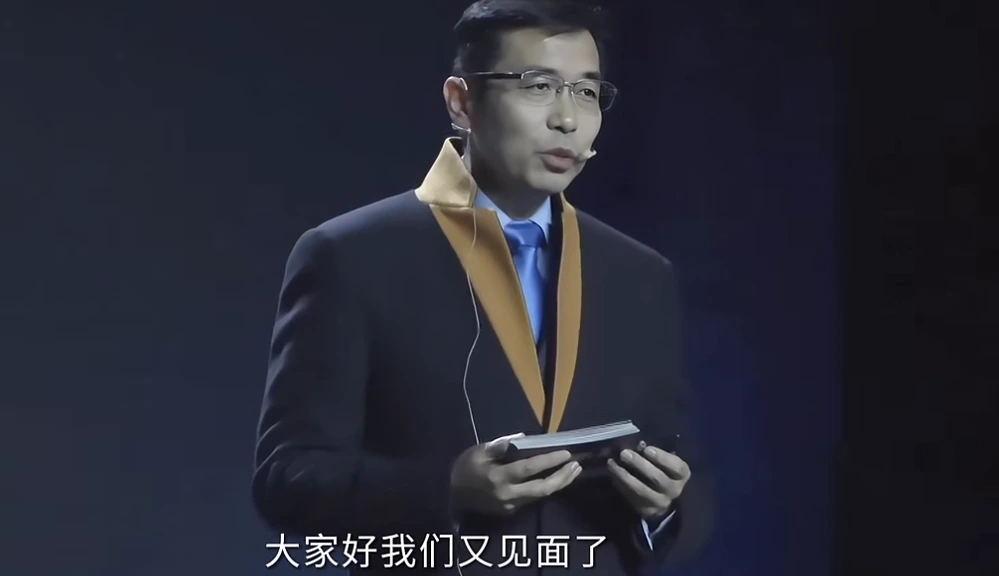
In late 2023, Tang Xiao’ou, the brilliant founder of AI giant SenseTime, passed away unexpectedly. At the company’s annual meeting in March 2024, the technical team used a proprietary large model to “resurrect” Tang. The digital avatar stood on screen, holding a water cup, and delivered a speech laced with his trademark humor, even cracking jokes with employees. This family-sanctioned digital resurrection was hailed as a profoundly respectful tribute to a tech pioneer.
- Exploitative Consumerism — The c Controversy:

Conversely, the dark side of this tech quickly reared its head. In early 2024, several content creators used deepfake tech to “resurrect” deceased celebrities—including actor Qiao Renliang and pop icon Coco Lee—without their families’ consent. The AI avatars looked into the camera and told fans, “Actually, I never really left…” The backlash was immediate. Qiao Renliang’s father publicly condemned the videos, stating they caused severe secondary trauma to the grieving family. He lambasted the creators for “rubbing salt in our wounds” and demanded the videos be taken down. This incident pushed the ethics of AI resurrection to the forefront of national media.
II. The Psychological Perspective: Healing Balm or Poisonous Illusion?
In the realm of psychology and grief counseling, experts view AI avatars with a mix of cautious optimism and profound alarm.
[Traditional Grief Resolution Process] Accepting the Loss ──> Experiencing the Pain ──> Adjusting to a World Without the Deceased ──> Relocating the Deceased Emotionally & Moving Forward
[AI Intervened Grief Process / Potential Risk] Arrested in the “Denial” or “Fantasy” Stage ──> Developing Pathological Grief
1. The Therapeutic Value: Emotional Closure and Legacy
In Gestalt therapy, counselors frequently use the “empty chair technique,” asking patients to imagine a deceased loved one sitting across from them so they can say what was left unsaid.
An AI avatar materializes that empty chair. For those who lose a loved one to sudden accidents or trauma, seeing a realistic digital version say, “Don’t worry, I am at peace,” can offer monumental comfort. It allows survivors to resolve “unfinished business” and can help alleviate acute symptoms of Post-Traumatic Stress Disorder (PTSD).
2. The Mental Health Toll: Pathological Grief and Digital Addiction
However, the flip side of the coin reveals severe psychological hazards.
-
Arresting the Grief Resolution: Psychologists emphasize that healthy mourning requires an individual to confront and accept the reality of death. AI avatars create a powerful illusion of immortality. If a survivor becomes overly reliant on an avatar that never ages and is always online, they may refuse to transition into reality, trapping themselves in a permanent state of denial.
-
The Uncanny Valley Backlash: When an AI looks 95% like a deceased relative but possesses a 5% micro-stiffness in its expressions or an unnatural cadence, it triggers the “Uncanny Valley” effect. This subtle wrongness can cause deep subconscious distress, anxiety, and psychological dissonance for the user.
-
Digital Emotional Dependency: When a survivor encounters hardships in the real world and retreats into a conversation with a 100% compliant, custom-trained AI version of their late parent, it creates a dangerous behavioral addiction. This can severely erode their motivation to form new, real-world relationships.
III. The Ethical Frontier: Who Owns the Right to Revive the Dead?
When we shift our focus from the emotional needs of the living to the rights of the silent deceased, we uncover a disturbing string of ethical black holes.
1. The “Right to be Dead” and the Right to Rest in Peace
Does a human being have the right to stay dead? Before the rise of generative AI, no one could have anticipated that their voice, facial expressions, and private texts would be scraped to train a digital puppet. If a person was fiercely private and introverted in life, does a relative have the moral right to drag them back to the screen just to satisfy their own longing? Many ethicists argue this is a fundamental violation of the deceased’s autonomy and dignity.
2. Post-Mortem Data Privacy
Building a hyper-realistic AI avatar requires extracting highly sensitive biometric and personal data: private diaries, WhatsApp/LINE/WeChat chat histories, and old videos.
The Core Ethical Conundrum: Does this data become a piece of property to be inherited and manipulated by next of kin, or does it remain an inalienable right tied strictly to the soul of the deceased?
3. Memory Manipulation and “Digital Puppetry”
AI models are prone to hallucinations. No matter how well-trained, a digital twin will eventually generate statements the deceased never would have agreed with.
If an AI avatar is co-opted by a family member to rewrite familial history—for example, making a digital grandfather say on camera, “I deeply regret leaving the house to your uncle”—it could trigger catastrophic legal and emotional warfare within families. The dead are effectively rendered voiceless puppets, manipulated by whoever controls the software.
IV. The Global Legal Landscape: Running to Catch Up (As of 2026)
Faced with a technology that evolves faster than statutory law, jurisdictions worldwide have spent the 2024–2026 period scrambling to erect regulatory guardrails.
Global AI Resurrection and Digital Life Regulations Comparison
| Region | Core Legislation & Status | Specific Stance on AI Resurrection of the Deceased |
| Mainland China |
Civil Code (Article 994) Provisions on the Administration of Deep Synthesis Internet Information Services |
Most Explicit. Protects the likeness, name, reputation, and privacy of the dead. Strict Rule: Anyone using deep synthesis tech to infringe on a deceased person’s personality rights can be sued by next of kin. Synthesizing voice/likeness requires explicit consent from immediate family. |
| United States |
Tennessee’s ELVIS Act (2024) Federal NO FAKES Act (Pending/Draft status) |
Focuses heavily on protecting voice and likeness as inheritable post-mortem rights. It heavily penalizes unauthorized AI cloning of anyone (living or dead) to crack down on commercial exploitation and unauthorized media creation. |
| European Union | EU AI Act (Fully implemented by 2025-2026) | Employs a “risk-based” approach. Mandatory Transparency: Any deepfake or AI avatar must feature unforgeable digital watermarks and clear labels. Simulating real individuals (including the deceased) without verified consent carries astronomical fines. |
| Taiwan |
Civil Code (Personality Rights Expansion) Draft Artificial Intelligence Basic Act |
Currently lacks specialized laws targeting AI resurrection. Courts rely on broader Civil Code provisions regarding “infringement on post-mortem personality rights causing emotional distress to survivors.” Unauthorized celebrity cloning allows families to sue for moral damages. |
| Hong Kong |
Personal Data (Privacy) Ordinance (PDPO) Common Law Principle of “Passing Off” |
Significant Legal Blindspot. The PDPO explicitly states that “personal data” only applies to living individuals; the deceased have no statutory privacy rights. Pursuing unauthorized AI resurrection relies on complex, roundabout claims like copyright infringement or passing off. |
V. Moving Forward: How Do We Coexist with the Digital Dead?
Technology cannot be uninvented. We cannot ban families from seeking solace, but society must establish a firm behavioral firewall. To prevent deep grief from turning into deeper harm, just as we draft traditional wills to distribute financial assets, modern citizens living in the AI era should consider including provisions for their digital identity.
Before passing away, individuals should explicitly dictate:
-
“Do I consent to my next of kin uploading my texts and voice into an AI model for resurrection?”
-
“Am I comfortable with an AI clone of myself interacting with my future grandchildren?”
-
“What platforms are allowed to host my digital twin, and for how long before it must be permanently deleted?”
This returns the sovereignty of post-mortem identity back to the individual.
Code Can Replicate a Voice, But It Cannot Copy a Soul
An AI avatar is ultimately a mirror, reflecting humanity’s deepest fear of mortality and its most stubborn attachment to love.
When we look into the digital eyes of a flawlessly rendered, perpetually smiling AI version of a late parent, we must maintain a tether to reality: algorithms can infinitely approximate a person’s pitch and pixels, but they will never capture the spark of free will and the chaotic soul that once lived.
Death is precisely what gives life its profound meaning; its irreversibility is what makes our time together sacred. True remembrance does not mean imprisoning our departed loved ones inside the cold glass of a smartphone screen. It means carrying the love, wisdom, and courage they gave us forward into a real, breathing, and beautiful world.
Letting the dead rest, so that the living may live—this remains the most vital lesson we must learn in the age of AI.
About Us

Based in Hong Kong, JoJo Ventures is a specialized production studio blending years of cinematic expertise with the power of CGI and AI. As the AI wave transforms the creative industry, we help businesses break through traditional production bottlenecks. Our mission is to provide more efficient, creative, and scalable ways for companies to communicate their vision.
Our work is trusted by global giants and local icons alike, including
- Pfizer
- Bosch
- Siemens
- Wellcome
- Eu Yan Sang
- SaSa
From premium commercials to the next generation of AI-generated visuals, we are your partners in the AI era.
Let’s build the future of your brand.
📧 Email: business@jojo.ventures
📱 WhatsApp: +852 9853 7469
You Might Be Interested in These Articles
How to Make a Professional AI Anime in 2026
Hong Kong AI Advertising Case Studies
Case Study: When Traditional Theater Meets AI Innovation
Case Study: JoJo Ventures Brings Pixar-Style Magic to Pfizer’s Latest Campaign
Google’s Gemma 4: A 3-Step Guide to Running It via Ollama
ByteDance’s Seedance 2.0 Complete Guide: The Best AI Video Model in 2026