As generative artificial intelligence enters a phase of hyper-acceleration, Hong Kong enterprises looking to drive business transformation are focusing on how to harness technological innovation for industrial upgrading. In this landscape, AI Avatars (or Digital Humans) have rapidly evolved from futuristic visual concepts into highly practical business tools capable of driving cost efficiency and elevating customer experience.
Faced with steep operational costs, structural frontline labor shortages, and the unique demand for high-quality bilingual (written Chinese and English) and trilingual (spoken Cantonese, English, and Mandarin) services, adopting AI Avatars is no longer just about building a modern brand image. Instead, it has become a strategic decision that can determine the success of an enterprise’s digital transformation roadmap.
This guide systematically explores four core application scenarios for AI Avatars, details their technical implementation paths, and examines the compliance measures required under the latest guidelines from Hong Kong’s Office of the Privacy Commissioner for Personal Data (PCPD).
At a Glance: Four Core AI Avatar Scenarios
To help Hong Kong enterprises evaluate where to start based on their business pain points and technical maturity, the table below outlines the key indicators and technologies across the four primary scenarios:
| Application Scenario | Core Pain Points | Key Tech Stack | HK Case Study & Platform Support |
| Smart Customer Service & Station Guidance |
Frontline labor shortages, high-volume repetitive FAQs, and difficulty in understanding local code-switching (Cantonese-English mix) |
Cantonese Speech-to-Text (STT) and Text-to-Speech (TTS), Large Language Models (LLM), Retrieval-Augmented Generation (RAG), real-time API integrations |
MTR Virtual Service Ambassador Tracy, MTR Phone-based AI Virtual Service Ambassador |
| 24/7 E-Commerce Livestreaming |
High costs of live hosts and operations, inability to run 24/7 campaigns, and expensive celebrity endorsement fees |
Voice Cloning, high-fidelity facial and gesture synthesis, real-time interactive engine |
Luo Yonghao AI Clone (regional case), JoJo Ventures |
| Virtual Ambassadors & Brand Campaigns | High celebrity endorsement fees and scheduling conflicts, physical shoot delays due to weather, and the high marginal cost of creating diverse marketing assets | Multimodal image and video generation models (e.g., Google Gemini), digital likeness reconstruction, and end-to-end AI post-production pipelines | One Cool Digital, JoJo Ventures |
| Internal Training & Multilingual Broadcasts |
High cost of professional video shoots and voiceovers, long content update cycles, and low engagement with text-heavy documents |
Multilingual Text-to-Speech (TTS), rapid voice cloning, automated video generation |
Cantonesetts AI (Cantonese TTS engine), JoJo Ventures |
Deep Dive: Core Application Scenarios
1. Smart Customer Service & Station Guidance
Core Pain Points
Public transport, banking, and government sectors in Hong Kong process massive volumes of repetitive inquiries daily—ranging from fare calculations to route guidance—straining frontline customer service lines and physical counters. Furthermore, Hong Kong’s unique code-switching habit (mixing Cantonese and English in daily conversations) often renders traditional keyword-based FAQ systems rigid and inaccurate. AI Avatars offer a 24/7, highly natural conversational interface with human-like expressions to automate these repetitive workloads.
Technical Implementation Path (RAG-Focused)
To build a highly reliable and natural customer service avatar for professional environments, enterprises must implement an architecture that combines Large Language Models (LLMs) with Retrieval-Augmented Generation (RAG).
-
Data Preparation and Vectorization: Official websites, service manuals, fare tables, and transit policies are converted into vectorized embeddings and stored in a secure vector database.
-
RAG-Driven Retrieval: When a customer asks a question, the system queries the vector database for the most relevant documents. Instead of relying on the LLM’s general pre-trained knowledge—which prevents AI hallucinations—the RAG system feeds the retrieved accurate documents as context to the LLM to generate a precise, business-compliant response.
-
Localized NLP & Dynamic APIs: Voice inputs are processed through a natural language processing (NLP) engine optimized for Cantonese and mixed-language structures. The system then connects to internal enterprise APIs (such as real-time route planners or fare databases) to provide dynamic, up-to-date answers.
Practical Implementation Considerations
In busy transit hubs or public areas, noise interference is a major challenge. Hardware must include directional microphones, while software should incorporate dynamic noise-reduction algorithms. Most importantly, the system must have a built-in human-handoff mechanism. If a customer reports an emergency, a lost item, or a medical issue, the AI Avatar must instantly hand the conversation over to a human agent.
Hong Kong Case Study: MTR Corporation (MTR)
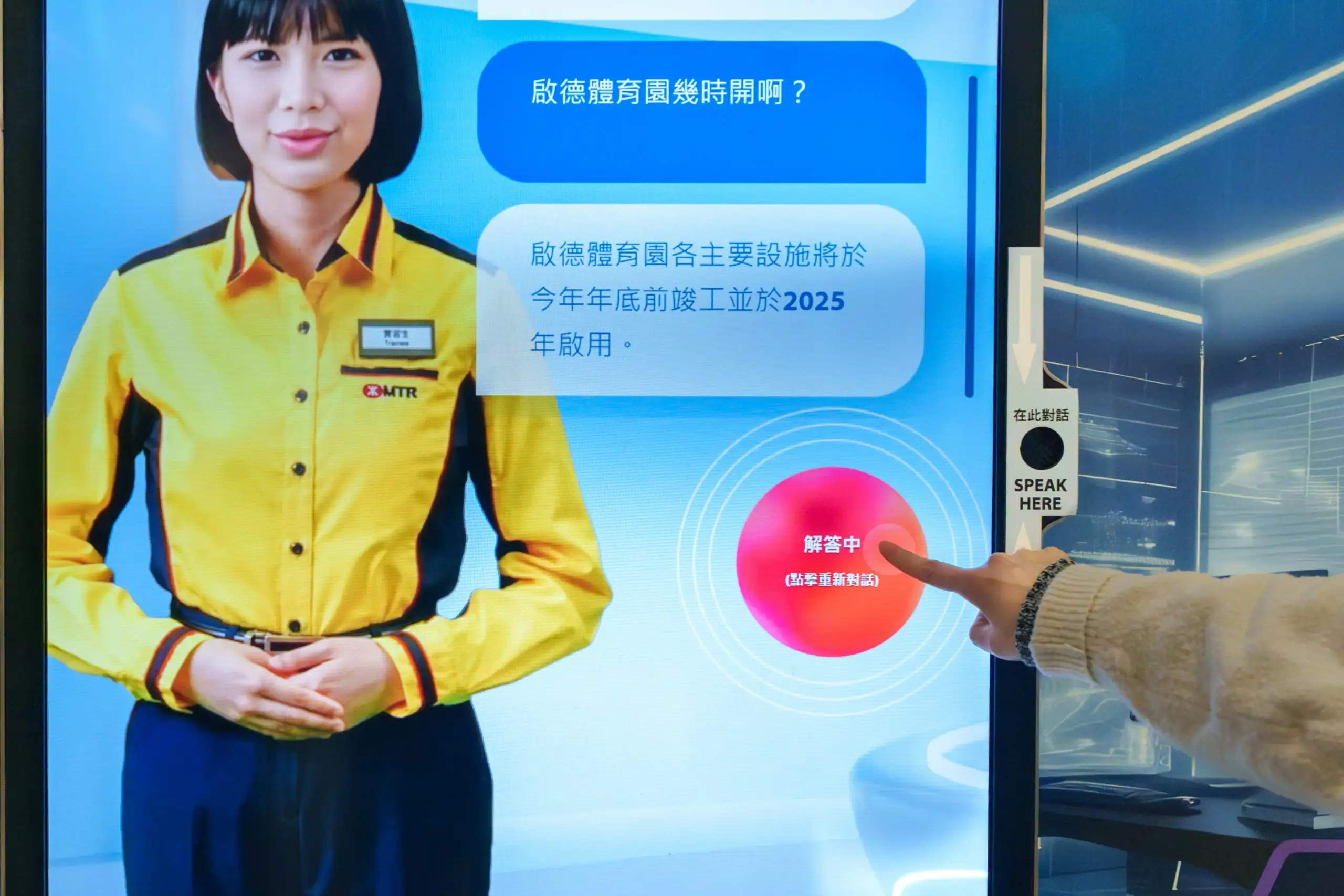
The MTR Corporation teamed up with Set Sail AI, a local NLP specialist, to launch Tracy, an AI “Virtual Service Ambassador”. Dressed in the classic yellow MTR uniform and featuring human-like facial expressions, Tracy serves passengers in both the paid and unpaid areas at Kai Tak and Quarry Bay stations. Passengers can tap a button to speak with Tracy in Cantonese, Mandarin, or English to find station facilities, train schedules, and nearby dining options with map routing. If an emergency occurs, Tracy instantly redirects the query to station staff. MTR also launched a phone-based AI Virtual Service Ambassador using Set Sail AI’s localized NLP engine, allowing callers to ask about fares and routes via natural phone dialogue without downloading any apps, greatly easing the burden on MTR’s call centers. This architecture has also been successfully deployed by other major public entities like KMB, CLP, and various HK Government departments.
2. 24/7 E-Commerce Livestreaming & Digital Hosts
Core Pain Points
Retailers and e-commerce merchants face escalating costs for professional live hosts and production crews, alongside physical constraints on studio space. Because top-tier hosts have limited schedules, brands miss out on late-night off-peak traffic when physical livestreaming shuts down.
Technical Implementation Path
Using generative AI models trained on a host’s high-definition video and audio data, teams can perform high-fidelity voice cloning and visual reconstruction.
-
Custom Persona and Voice Cloning: The AI Avatar replicates the specific host’s look, micro-expressions, gestures, and tone of voice.
-
Real-time Interaction Engine: By integrating product databases, the avatar reads live chat messages in real time and generates instant, context-aware responses within seconds, enabling “IP-as-a-Service” to scale the value of key creators.
Practical Implementation Considerations
E-commerce platforms enforce strict guidelines against low-quality, loop-recorded streams to protect user experience. Additionally, all product descriptions generated by the AI must remain within pre-approved databases to comply with Hong Kong’s Trade Descriptions Ordinance and avoid false advertising risks.
Regional Business Case
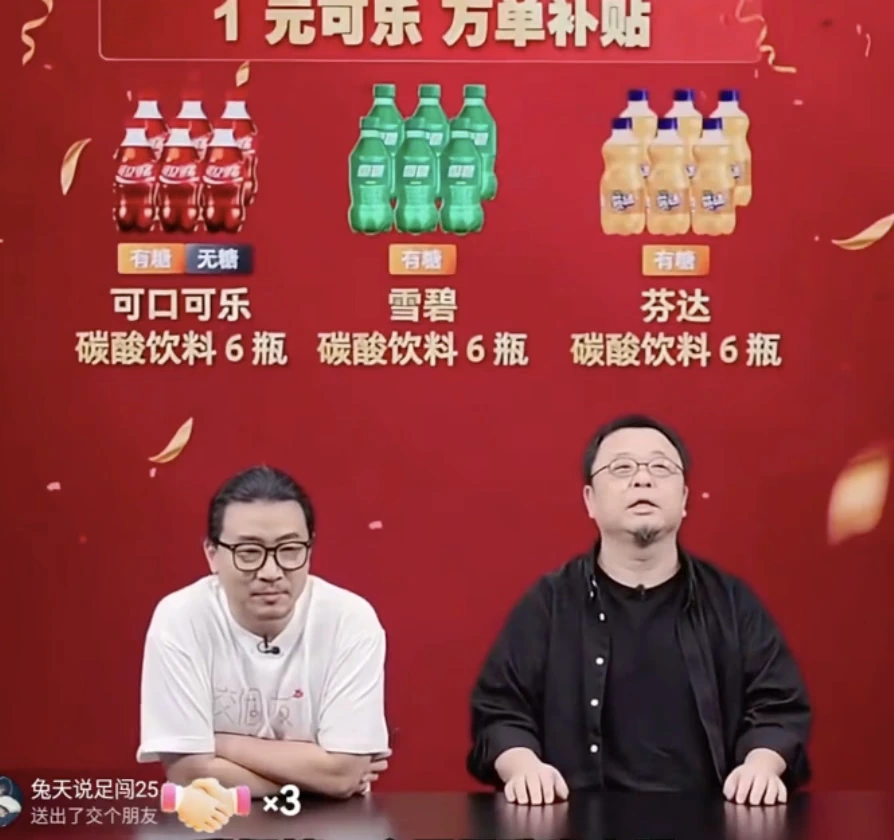
In the Asia-Pacific e-commerce market, Chinese entrepreneur Luo Yonghao’s AI digital avatar livestream has demonstrated remarkable commercial impact. The digital host, built using Baidu’s generative AI model, was trained on five years of the host’s livestream footage. In a recent session, its GMV (gross merchandise value) in just 26 minutes exceeded what the real Luo Yonghao previously achieved in a one-hour livestream, attracting over 13 million cumulative viewers while reducing overall operating costs by more than 80%.
For local Hong Kong businesses, JoJo Ventures offers localized solutions by training custom digital human avatars using proprietary business data. These avatars support real-time broadcasting in Cantonese, Mandarin, and English, along with AIGC-powered intelligent responses, helping brands quickly expand into overseas and mainland e-commerce markets.
3. Virtual Ambassadors & AI-Generated Brand Campaigns
View this post on Instagram
Core Pain Points
Traditional brand campaign shoots are expensive, slow, and highly dependent on celebrity availability and physical conditions. In Hong Kong, physical outdoor shoots are regularly disrupted by unpredictable weather, such as typhoons, leading to costly venue fees, crew overheads, and missed marketing windows. Producing multiple versions of an ad across various channels (TV, MTR billboards, social media) normally requires multiple days of filming, which quickly blows through marketing budgets.
Technical Implementation Path
By utilizing generative visual models, agencies can digitally reconstruct a celebrity’s likeness based on legally authorized and captured data.
-
Likeness Generation and Scene Synthesis: Multi-modal models like Google Gemini take high-resolution authorized assets to generate highly realistic, complex, or imaginative backdrops (such as outer space or sci-fi environments) directly on a computer.
-
End-to-End AI Production: Teams like One Cool Digital and JoJo Ventures optimize role-specific micro-expressions and lighting entirely in post-production, eliminating the need for physical set building or having the talent travel during adverse weather conditions.
Practical Implementation Considerations
When using AI-generated celebrity likenesses, intellectual property agreements must be highly precise. Contracts between the brand, production agency, and talent agency must clearly define the ownership of the “AI model weights,” its operational period, channel distribution limits, and safety measures to prevent unauthorized usage. To align with PCPD recommendations and maintain customer trust, the final video should feature clear “AI-generated” watermarks.
Hong Kong Case Study: One Cool Digital, JoJo Ventures
WeLend, a leading smart online lending platform in Hong Kong, partnered with One Cool Digital Limited to launch Hong Kong’s first fully AI-generated brand commercial featuring Malaysian star Lin Min-chen. Using Google’s Gemini models, the production team synthesized multiple sci-fi settings and characters using Min-chen’s authorized likeness.
JoJo Ventures is one of Hong Kong’s leading local AI advertising production companies. Its clients include Wellcome, Sa Sa, the Hong Kong Jockey Club, Eu Yan Sang, Pfizer, and Bosch. In recent years, the company has also developed high-performance solutions such as AI hosts, AI brand ambassadors, and digital avatars. Its image-generation AI tool, JifChat, is promoted by its AI spokesperson Jenny and has successfully generated significant buzz on social media platform Threads.
4. Corporate Training & Multilingual Broadcasts
Core Pain Points
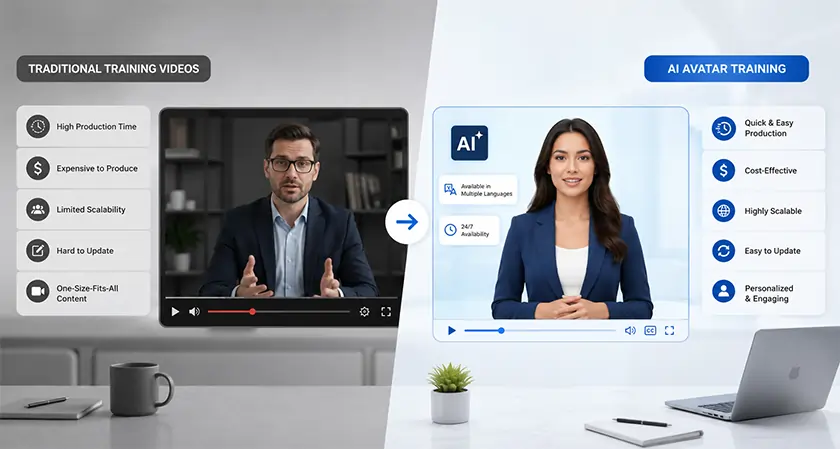
Large multinational corporations and local institutions spend substantial time and budget filming internal compliance training, policy updates, and executive announcements. Traditional text-heavy PDFs or Word files suffer from low employee engagement, which compromises training outcomes.
Technical Implementation Path
By supplying training transcripts to Cantonese-optimized Text-to-Speech (TTS) models like Cantonesetts AI, companies can generate natural, high-fidelity localized audio within minutes.
-
Voice and Lip-Sync Synthesis: Using platforms like DYXnet “LineLink,” corporate trainers upload these audio tracks alongside pre-recorded footage of executives or instructors to automatically generate videos with precise lip-syncing across Cantonese, English, and Mandarin.
Practical Implementation Considerations
Data security is paramount here. When using synthetic training tools, enterprises must strictly control access permissions for training documents and executive voice samples. Sensitive business data should never be uploaded to public, free, or unsecured third-party AI platforms, as this can lead to data leaks or the creation of unauthorized voice prints that could be exploited in deepfake corporate fraud.
Practical Enterprise Deployment
Many financial, insurance, and public utility organizations in Hong Kong have begun adopting digital human–based automated broadcasting technology to replace the traditionally costly process of physical video production. JoJo Ventures has also successfully applied AI digital humans to internal training, transforming them into 24/7 virtual instructors that provide instant and fully accurate answers to employees’ questions on company policies, administrative procedures, and video guidelines, significantly reducing HR training costs.
Navigating Regulatory Compliance & Personal Data Privacy in Hong Kong
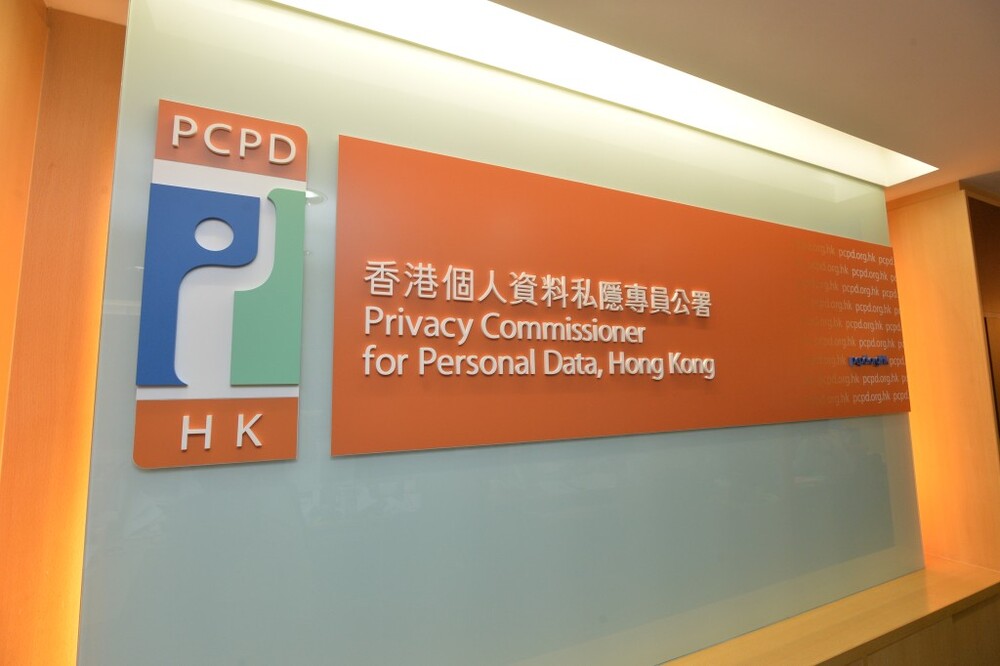
While AI Avatars offer significant operational advantages, Hong Kong enterprises must keep compliance at the top of their minds. The Office of the Privacy Commissioner for Personal Data (PCPD) has issued clear frameworks to guide organizations on the safe use of AI.
PCPD’s Core Framework and Ethical AI Principles
The PCPD recommends that organizations establish a robust Personal Data Privacy Management Programme. AI systems should adhere to the three fundamental data stewardship values (Respect, Mutual Benefit, and Fairness) and seven ethical AI principles: Accountability, Human Oversight, Transparency & Explainability, Data Privacy, Fairness, Beneficial AI, and Reliability, Robustness & Security.
To address generative AI, the PCPD has issued:
-
Model Framework for Personal Data Protection in Artificial Intelligence (2024): Step-by-step practical advice for procurement, deployment, and usage.
-
Checklist for Employees on the Use of Generative AI (2025): Guidelines for organizations to manage employee usage of GenAI tools in the workplace.
How Do AI Service Providers Reassure Clients? (Taking JoJo Ventures as an Example)
When Hong Kong enterprises seek to collaborate with external AI digital human and AIGC service providers, data security, intellectual property boundaries, and whether data will be misappropriated by models are often the core pain points that management cares about most. As a local AI-native creative studio, the practical guide “How JoJo Ventures uses, and doesn’t use, generative AI” released by JoJo Ventures sets an excellent example of compliance and security precautions for the industry, effectively addressing enterprises’ concerns:
- “We use AI to accelerate creative work, not replace creative responsibility”: JoJo Ventures adheres to the “human-in-the-loop” principle. When generating AI digital humans or ad visuals, AI is only used to assist in concept exploration and accelerate iteration. All final decision-making power remains firmly in the hands of experienced creative professionals, ensuring that outputs fully comply with clients’ commercial standards, compliance requirements, and ethical guidelines. This prevents the brand PR risks associated with technology running on “autopilot.”
- “We do not use client data for training without explicit consent”: Many enterprises worry that their sensitive brand assets, likenesses, internal data, or training materials will be used by AI service providers to fine-tune internal models, leading to leaks of trade secrets or privacy. JoJo Ventures explicitly promises that unless prior explicit consent is obtained from the client, it will never use any client-provided data, materials, images, or brand assets to train or fine-tune AI models.
- “Data Minimization Principle and Collaboration with Best-in-Class Third-Party Tools”: In its operations, JoJo Ventures strictly abides by the principle of “use what is necessary, protect what is sensitive, and do not expand usage without consent,” using only the necessary data required to deliver the work. Furthermore, the studio chooses to work with established external AI platforms that offer strong data protection and privacy safeguards (such as Runway, Midjourney, Kling AI, fal.ai, etc.), rather than using free versions of tools that lack security oversight, thereby minimizing the leakage risk of clients’ sensitive data within the supply chain.
Key Risks and Mitigation Strategies for AI Avatars
The table below breaks down the primary regulatory and governance risks associated with deploying AI Avatars in Hong Kong, along with practical mitigation strategies aligned with PCPD expectations:
| Risk Area | Specific Vulnerabilities | Enterprise Mitigation Strategy (PCPD Aligned) |
|
Data Security & Privacy Leaks |
1. Customer or employee data in custom training sets may leak during the avatar’s real-time outputs. 2. Uploading proprietary materials to public generative AI tools can allow third-party clouds to absorb your IP. |
1. Opt for Commercial Licenses: Choose enterprise-grade versions of AI tools that provide stronger data privacy and security guarantees over free public editions. 2. Data De-identification: Run anonymization or de-identification on datasets before feeding them into RAG systems. 3. Private Cloud Hosting: Evaluate on-premise or private cloud hosting for core AI models and voice prints to keep strict control over your data security. |
|
Algorithmic Bias & Accountability |
1. Poor training data can cause customer-facing avatars to output biased, discriminatory, or incorrect decisions. 2. Due to the “black box” nature of deep learning, organizations may struggle to explain the logic behind an avatar’s automated responses. |
1. Maintain Human-in-the-Loop: Ensure high-risk processes (like loan applications or insurance claims) are verified and signed off by human staff, keeping the AI Avatar as a front-end assistant. 2. Establish Fact-Checking Workflows: Train employees to review and audit AI-generated content to ensure factual accuracy and ethical alignment. |
|
AI Agent Autonomy & Vendor Risks |
1. Autonomous AI agents calling APIs might execute actions outside their authorization, leading to financial or data transmission errors. 2. Heavy reliance on external APIs can create a “black-box risk.” If the third-party model errs, the enterprise still bears direct liability. |
1. Sandboxed API Permissions: Implement strict sandbox boundaries for APIs accessed by AI Avatars to restrict their autonomous decision-making power. 2. Vendor Due Diligence: Secure clear vendor agreements specifying data ownership, compliance certifications, and liability limits. 3. Add AI Watermarks/Labels: Clearly tag digital hosts, avatars, or videos with “AI-generated” or “Virtual Ambassador” labels to respect customer transparency. |
About Us

Based in Hong Kong, JoJo Ventures is a specialized production studio blending years of cinematic expertise with the power of CGI and AI. As the AI wave transforms the creative industry, we help businesses break through traditional production bottlenecks. Our mission is to provide more efficient, creative, and scalable ways for companies to communicate their vision.
Our work is trusted by global giants and local icons alike, including
- Pfizer
- Bosch
- Siemens
- Wellcome
- Eu Yan Sang
- SaSa
From premium commercials to the next generation of AI-generated visuals, we are your partners in the AI era.
Let’s build the future of your brand.
📧 Email: business@jojo.ventures
📱 WhatsApp: +852 9853 7469
You Might Be Interested in These Articles
How to Make a Professional AI Anime in 2026
Hong Kong AI Advertising Case Studies
Case Study: When Traditional Theater Meets AI Innovation
Case Study: JoJo Ventures Brings Pixar-Style Magic to Pfizer’s Latest Campaign
Google’s Gemma 4: A 3-Step Guide to Running It via Ollama
ByteDance’s Seedance 2.0 Complete Guide: The Best AI Video Model in 2026